Questionnaire – Annual salary statistics
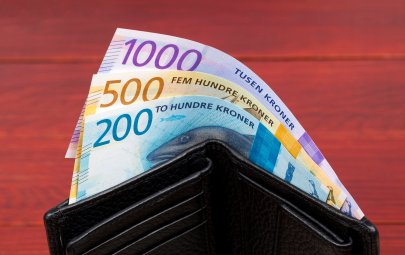
Thursday, January 8 we sent an e-mail to all active members of Forskerforbundet who work in non-state sectors, with a link to the questionnaire for our annual salary statistics per December 2025.
Together with Forskerforbundet, the Young Academy of Norway is launching a major survey aimed at scientific staff in the early stages of their careers. The goal is to strengthen the knowledge base and conduct more targeted work for this important group.
It is entirely possible for foreign researchers to undertake external assignments such as grading or supervising, without it being an obstacle to obtaining a residence permit. That was the conclusion reached when Forskerforbundet raised the issue in a meeting with UDI.
Forskerforbundet has taken the initiative to meet with the Norwegian Directorate of Immigration (UDI) to address the situation of foreign researchers who are denied residence permits after grading assignments or other external assignments.
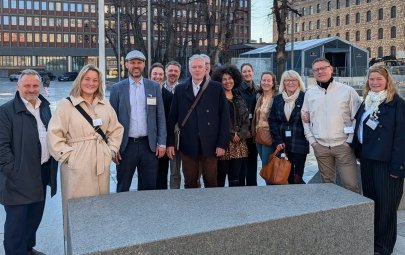
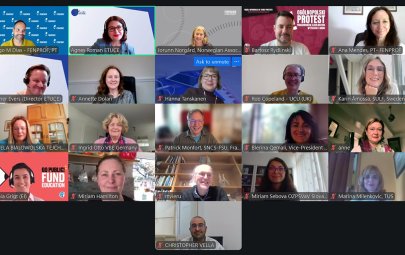
Last week, the Higher Education and Research Standing Committee (HERSC) met online to discuss how unions can shape the future of European Higher Education and Research.
Forskerforbundet have received several inquiries regarding problems with residency applications after grading assignments.
Ready to negotiate your salary? Check out the Forskerforbundet salary statistics first, and figure out what you’re really worth. Our salary statistics allow you to compare your salary with what others in similar positions earn. This is valuable in salary negotiations.
Our salary statistics provide an updated overview of our members' salary levels. The statistics for the state sectors for 2024 have now been published. Log in to check the statistics.
The Brain Power Award is given to one or more members of Forskerforbundet who, through their knowledge-based work, have made significant contributions to society. The deadline for nominating candidates is September 8, 2025.
Statistics Norway (SSB) is now sending out a time use survey to all academic staff in the university and university college sector. – We encourage our members to respond to this, says Steinar A. Sæther, president of Forskerforbundet.
– We went into the negotiations demanding real wage growth and everything distributed locally, and that's what we got, summarizes Unio state leader Steinar A. Sæther.
Forskerforbundet's Chief Advisor Jorunn Dahl Norgård takes over the position of Chair of HERSC, a European collaboration committee for trade unions in research and higher education.
Academic freedom has contributed to the extraordinary resilience of democracy in the Nordic countries, success in technological and societal innovation, and a high Nordic quality of life. But this legacy is now at risk, a fresh report from Nordic academic unions shows.
We express full support and solidarity with our colleagues in American research and higher education institutions in their fight against Trump’s anti-knowledge policies.
On November 20, the National Wages Board ruled that Unio and Akademikerne will keep their basic collective agreement in the state sector. This collective agreement was negotiated between Unio, Akademikerne and the state in 2022, and will now be valid until April 30, 2026.
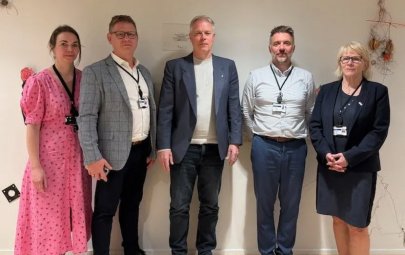
Five Nordic trade unions have taken a joint initiative to strengthen academic freedom. They are challenging the politicians who have gathered this week for the Nordic Council in Iceland.
The National Wages Board will process the wage settlement for Unio’s members in the state sector on Thursday 7 November. – I have faith that it will go our way, says Unio's negotiator Guro Elisabeth Lind.
When a strike may cause danger to life and health, the government can demand that the strike be stopped and that the collective bargaining settlement be processed and decided by the National Wages Board. What does that actually mean?
of 2