Unio defended its collective agreement in the state sector
After mediation ten hours overtime, it is clear that Unio's collective agreement with the state will be continued and strengthened. The wage settlement in the state has a financial framework of 4.4 percent.
29.05.2026
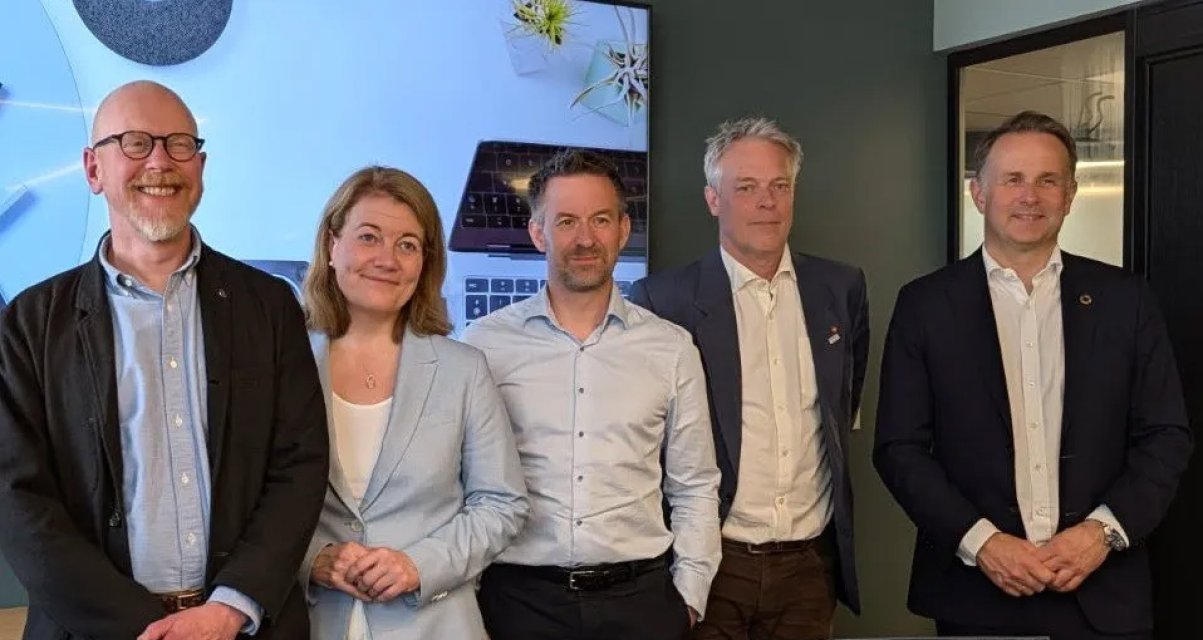
Reached the finish line: Christer Wiik Aram (Akademikerne), Bente Johanne Kraugerud (Government Director of Personnel), Jens B. Jahren (YS), Steinar A. Sæther (Unio) and National Mediator Mats Ruland.
This week, Unio has been with the National Mediator to find a solution in this year's wage settlement in the state sector. After ten hours of overtime, the parties reached an agreement.
– We had two demands in this settlement: To defend and further develop our collective agreement, and to ensure real wage growth for our members. When we agreed with the state, it is because the result in both of these areas is acceptable, says Unio stat's chief negotiator Steinar A. Sæther.
The settlement has an economic framework of 4.4 percent, in line with the results for the frontline sector. The entire framework will be distributed in local negotiations.
– These are uncertain economic times, but this framework suggests that wages can increase more than prices. Now it is our local union representatives who will negotiate the best solution for their members, in line with the needs at each individual workplace. We have good experience that this is how we get the most out of every krone, says Sæther.
Since 2022, Unio has had its own collective agreement with the state, together with Akademikerne. The main principles of this agreement are continued, but now YS is also affiliated with the same agreement.
– Our agreement has given the union representatives good tools to ensure wage development for state employees with higher education, and it has been crucial for us to be able to continue this work. Our goal this year was to defend and further develop the collective agreement, and we have succeeded.
– This has been a system battle, which is about how wages in the state should be distributed as best as possible. We have won that battle, and that is good for both state employees and for society.
– There will still be local wage negotiations at the enterprise level, and we have included provisions that strengthen the influence of the union representatives in the negotiations. The dispute resolution solutions have also been improved. In addition, working groups have been set up to further develop important parts of the collective agreement, including life phase policy and the job code system for career paths in the state.
The compensation for inconvenient working hours has also been increased.
– We have succeeded in ensuring that the rates for work at inconvenient working hours are increased significantly. This means a lot for state employees who work weekends, evenings and nights, including in the police.
The framework for home loans in the Norwegian Public Service Pension Fund increases from 2.3 to 2.8 million.
The local wage negotiations start in many places before the summer, and have a final deadline of October 31. The result in the central wage negotiations will be subject to a referendum for all members in the state sector. The referendum will take place from Wednesday, June 10th at 08:00 to Friday, June 19th at 16:00 and will be administered by Unio.